
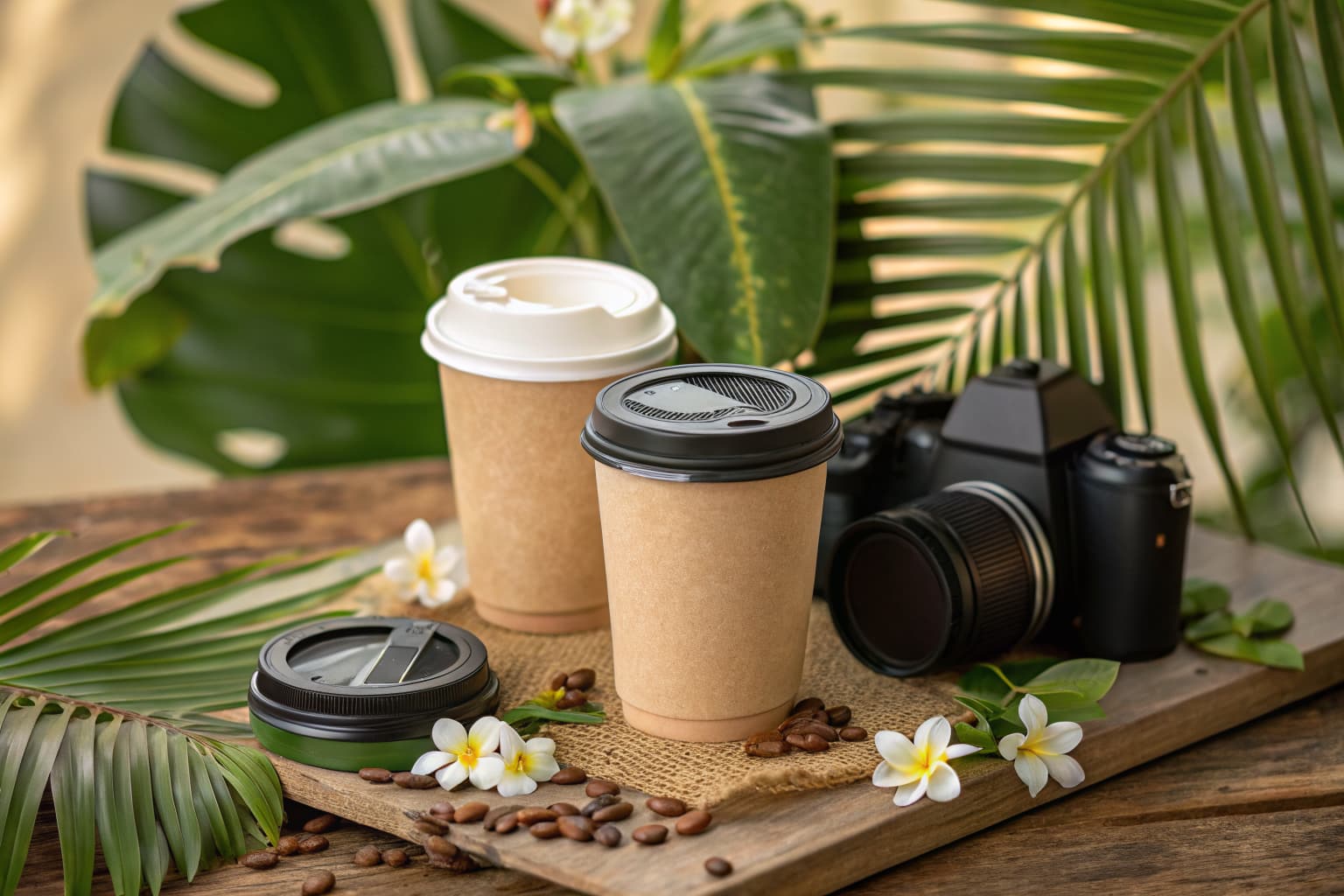
Every day, hundreds of billions of disposable cups and lids move through the global food service system — and almost none of them are truly recyclable or biodegradable. Whether it's a morning coffee in a kraft-lined paper cup, a midday smoothie in a clear plastic cup with a dome lid, or an afternoon soup in a styrofoam container, the end-of-life story is almost always the same: landfill, incineration, or ocean pollution. PHA and PLA compostable cups and lids are changing that story.
These two bioplastic families — Polyhydroxyalkanoate (PHA) and Polylactic Acid (PLA) — represent the leading edge of sustainable food service packaging. Both are made from renewable, plant-based inputs rather than petroleum. Both can biodegrade under the right conditions. And both perform well enough to serve hot coffee, iced drinks, and everything in between without sogginess, leaching, or structural failure. Understanding their differences — and how to use each one appropriately — is essential for any business serious about moving beyond single-use plastic.
The Cup and Lid Problem: Why It Matters
Over 500 billion disposable cups are used globally every year. The vast majority end up in landfills or waterways — not because people don't care, but because the materials themselves are not compatible with existing recycling or composting infrastructure. Even cups marketed as "recyclable" are typically lined with polyethylene plastic to prevent leakage, which disqualifies them from most recycling streams. Lids fare even worse: thin polypropylene and polystyrene lids are routinely rejected by recycling facilities due to their light weight and contamination risk.
The result is a category of packaging that is used for minutes and persists for centuries. A conventional plastic lid takes over 400 years to break down — and even then, it doesn't disappear. It fragments into microplastics that enter soil, groundwater, and marine food chains, accumulating in the bodies of fish, birds, and ultimately humans.
500B+ cups/year
Over 500 billion single-use cups are discarded globally every year — the majority end up in landfills or waterways.
Not truly recyclable
Most paper cups have a polyethylene lining that disqualifies them from recycling. Thin plastic lids are rejected by most facilities.
400+ years to break down
A conventional plastic lid persists in the environment for centuries, fragmenting into microplastics along the way.
PLA Cups and Lids: Plant-Based Performance for Cold Applications
Polylactic Acid — PLA — is the most widely deployed bioplastic in the food service industry. Derived primarily from fermented plant starches such as corn, sugarcane, and cassava, PLA is a petroleum-free material with a significantly lower carbon footprint than conventional plastics. It can be processed using standard plastic manufacturing equipment, which has made it relatively straightforward for manufacturers to adopt at scale.
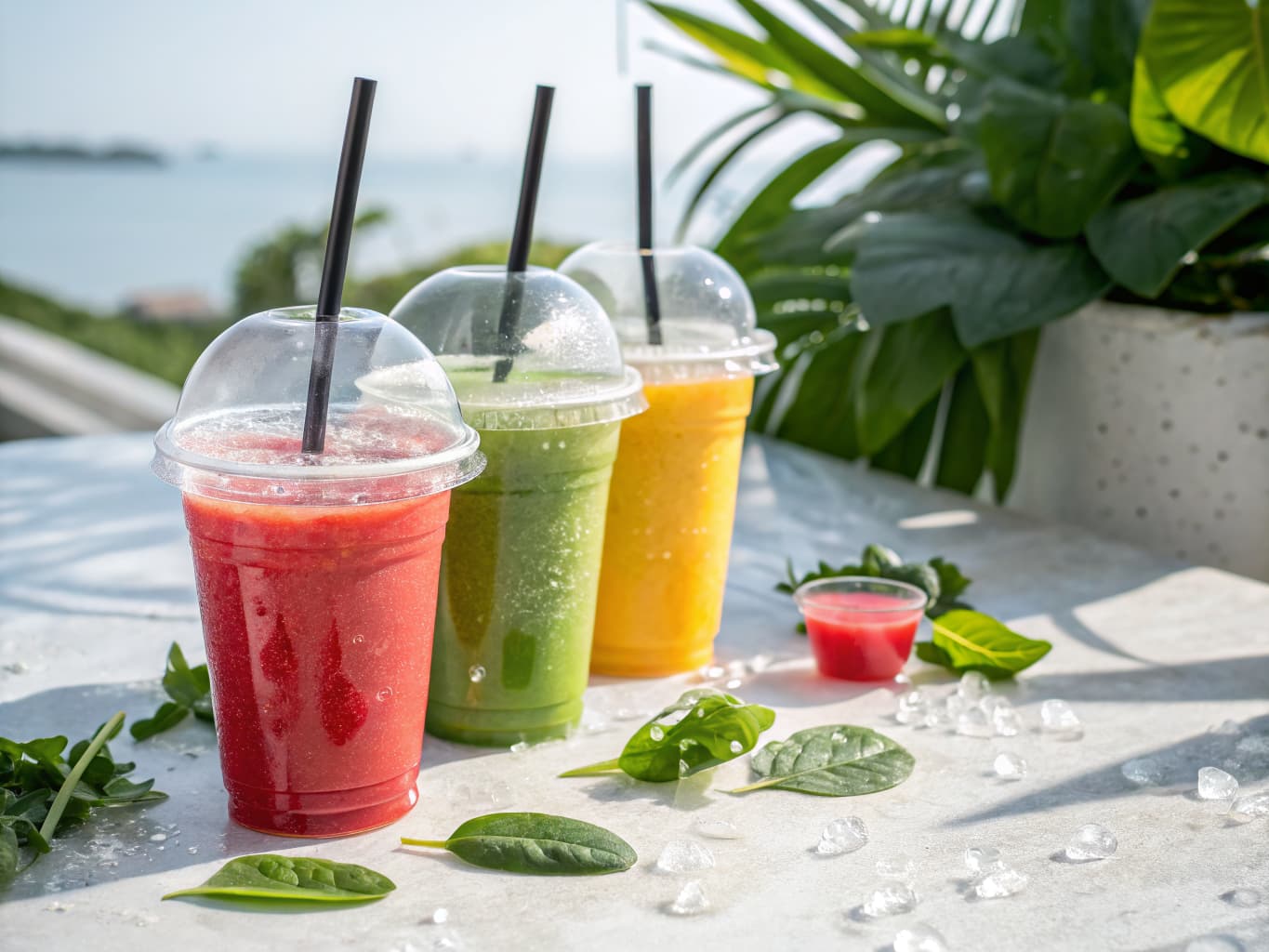
PLA excels in cold beverage applications. Transparent PLA cold cups have the clarity and rigidity that consumers expect from a smoothie or iced coffee cup — without the petroleum content of traditional PETE or polypropylene. PLA dome lids and flat lids snap cleanly onto matching cup rims and provide leak-resistant seals for transport. For food service operators building a compostable cold beverage program, PLA is an excellent starting point.
The important caveat for PLA: its biodegradability is conditional. PLA requires industrial composting conditions — sustained temperatures above 140°F (60°C), controlled humidity, and active microbial populations — to break down within a reasonable timeframe. In a home compost pile, PLA degrades very slowly. In a landfill, it may persist for decades. And in ocean water, PLA behaves similarly to conventional plastic — it does not biodegrade meaningfully in marine environments.
This makes PLA a strong choice for operations with access to industrial composting infrastructure — and a less ideal choice for contexts where end-of-life disposal is uncertain.
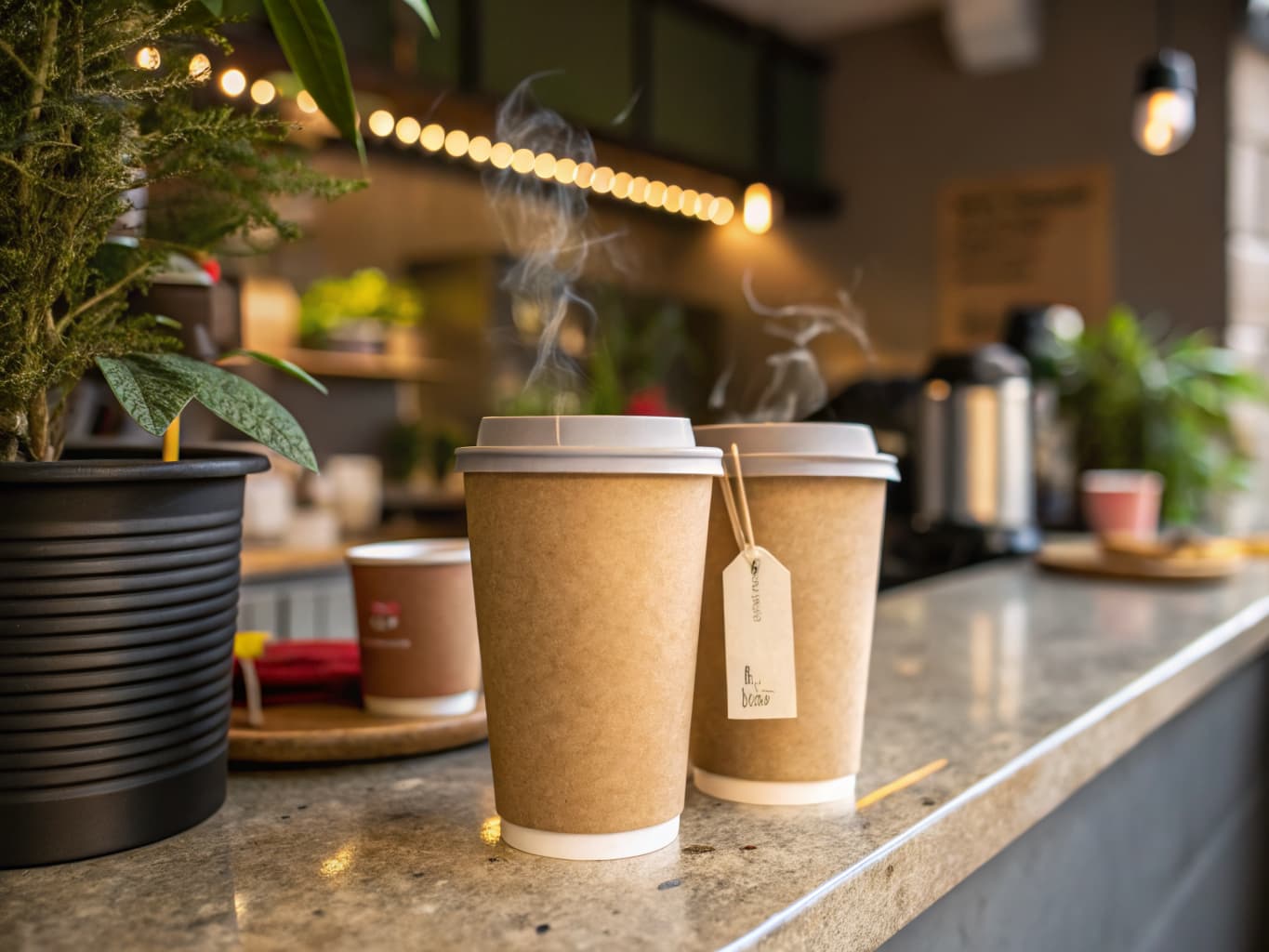
PHA Cups and Lids: The Next Generation — Hot, Cold, and Marine-Safe
Polyhydroxyalkanoate — PHA — is produced by bacteria that consume organic material (plant oils, agricultural byproducts, food waste) and store the excess energy as biopolymer granules inside their cells. These granules are harvested and refined into a bioplastic that shares many of conventional plastic's performance properties, but with a fundamentally different environmental profile.
Where PHA stands apart from PLA — and from every other compostable material on the market — is its all-environment biodegradability. PHA does not require industrial composting conditions to break down. Naturally occurring bacteria and enzymes in soil, freshwater, home compost, and the open ocean can recognize and metabolize PHA polymer chains. A PHA cup that reaches the ocean will fully biodegrade in 6–18 months. A conventional plastic cup in the same environment takes centuries and leaves microplastic fragments behind indefinitely.
For hot beverage applications, PHA offers particular advantages. Unlike PLA — which can warp or deform under the heat of coffee or tea — PHA formulations for hot cups maintain structural integrity at higher temperatures. PHA hot cups do not require the polyethylene lining that contaminates conventional paper cups; the PHA material itself provides the moisture barrier needed to keep hot liquids contained. The same applies to lids: PHA flat lids and sip-through lids maintain their shape and seal under thermal stress.
Cold Cups and Dome Lids: PHA and PLA for Cold Beverage Programs
Cold beverage cups present a different set of material requirements than hot cups. Clarity, rigidity in chilled environments, condensation resistance, and the ability to hold carbonated beverages without losing structural integrity are the primary performance factors for cold cups and their lids.
Both PHA and PLA perform well in cold applications. PLA clear cold cups are visually indistinguishable from conventional PETE cups — they have the crystal clarity that allows customers to see the beverage inside, the rigidity to hold shape in a cold dispensing environment, and compatibility with dome lids for specialty drinks. PHA cold cups can be formulated to achieve similar clarity while offering superior end-of-life biodegradability.
Dome lids — the tall rounded lids used for whipped-cream topped drinks, smoothie bowls, and layered specialty beverages — are available in both PLA and PHA formulations. These lids require precise snap-fit tolerances to prevent spillage, and both materials can be molded to meet those specifications. PHA dome lids additionally offer the assurance that if the lid is lost or disposed of improperly, it will not persist in the environment indefinitely.
PHA vs. PLA: Which Is Right for Your Operation?
Both materials represent a genuine step forward from petroleum-based plastics. The choice between them depends on your specific use case, the disposal infrastructure available to your customers, and the environmental claims you want to make with confidence.
PLA Cups & Lids
Strengths
Lower cost per unit. Excellent clarity for cold cups. Widely available. Good performance for cold beverages and iced drinks.
Limitations
Requires industrial composting to biodegrade properly. Does not degrade in marine environments. May deform under heat — not ideal for coffee or soups above 105°F without specialized formulation.
Best For
Best for: Cold beverage programs, smoothie bars, iced coffee, operations with industrial composting access.
PHA Cups & Lids
Strengths
Biodegrades in soil, home compost, freshwater, and ocean. Safe for hot beverages. Contains no petroleum, BPA, or phthalates. Marine-certified.
Limitations
Higher production cost than PLA. Availability expanding but still more limited than PLA. Clearer formulations still maturing in transparency vs. PLA.
Best For
Best for: Hot beverage programs, operations without industrial composting access, coastal or marine-adjacent businesses, premium sustainability positioning.
What “Compostable” Actually Means — and Why Certification Matters
The word "compostable" has been stretched to cover a wide range of claims — some rigorous, some misleading. For food service operators making purchasing decisions and environmental commitments, understanding the certification landscape is essential.
- 01
ASTM D6400 (USA)
The American standard for compostable plastics — requires that the material biodegrades in industrial composting conditions within 180 days and leaves no toxic residue. PLA and PHA cups and lids can both achieve this certification.
- 02
EN 13432 (Europe)
The European equivalent of ASTM D6400. Requires 90% biodegradation within 6 months under industrial composting conditions. Also tests for eco-toxicity in the resulting compost.
- 03
OK Compost HOME (TÜV Austria)
A more demanding certification that verifies biodegradation in home compost conditions at lower temperatures. PHA can achieve this; most PLA formulations cannot without significant modification.
- 04
OK Biodegradable MARINE (TÜV Austria)
The gold standard for environmental claims — certifies that the material biodegrades in open ocean conditions. Only PHA-based materials reliably achieve this certification. PLA does not.
- 05
BPI Certification (USA)
The Biodegradable Products Institute certification mark is widely recognized in North American composting facilities and confirms compatibility with industrial composting programs.
Hot Cups vs. Cold Cups: Different Demands, Shared Mission
The distinction between hot and cold cup applications goes beyond temperature tolerance. The structural, safety, and end-of-life considerations differ significantly — and the right compostable material for each application reflects those differences.
Hot Cups (Coffee, Tea, Soup)
- ✓Must withstand 160–180°F (71–82°C) without deforming
- ✓Requires insulation — double-wall or sleeve
- ✓No petroleum-based lining needed with PHA
- ✓Flat or sip-through lids must maintain shape under heat
- ✓Safe for direct contact with hot beverages (no leaching)
- ✓PHA preferred for hot applications over standard PLA
Cold Cups (Smoothies, Iced Coffee, Fountain)
- ✓Clarity preferred for beverage display
- ✓Must maintain rigidity in refrigerated environments
- ✓Condensation resistance on exterior
- ✓Compatible with dome lids for specialty drinks
- ✓PLA or PHA both perform well in cold applications
- ✓Dome lids require precise snap-fit tolerances
The Business Case for Switching
The economics of compostable cups and lids have shifted significantly in recent years. As production volumes for both PLA and PHA have scaled, per-unit costs have declined. For many food service operators, the cost premium over conventional plastic is now modest — and increasingly offset by customer perception, regulatory pressure, and brand positioning advantages.
Consumer research consistently shows that customers — particularly in the 18–45 demographic — are willing to pay more for products and services from businesses that demonstrate genuine environmental commitment. A compostable cup program with clearly communicated PHA or PLA certification is a visible, tangible signal of that commitment that paper straws or tote bags cannot match.
On the regulatory side, single-use plastic restrictions are expanding rapidly. The European Union's Single-Use Plastics Directive has already banned or restricted conventional plastic cups and lids in EU markets. Similar legislation is advancing across U.S. states, Canadian provinces, and international markets. Businesses that build compostable packaging programs now will be compliance-ready rather than scrambling when mandates arrive.
“The switch to compostable cups and lids isn't just about doing the right thing for the environment — it's about getting ahead of where the market and regulators are heading. The operators who make that move now will have a structural advantage over those who wait.”
— Jim McGinnis, V.P. of Marketing & Sales, Pure Form Solution LLC
Pure Form Solution's Biodegradable Cups & Lids Program
Pure Form Solution's biodegradable cups and lids line covers the full spectrum of food service needs — hot beverage cups in multiple sizes, cold cups with matching dome and flat lids, fountain beverage formats, and soup containers — all made from PHA and plant-based bioplastic resins that meet the highest available biodegradability certifications.
Our products are designed as true drop-in replacements: they are compatible with standard cup and lid sizes used across the food service industry, require no equipment modifications, and perform identically to conventional plastic alternatives in daily use. The difference is what happens after they are used.
Every Pure Form cup and lid is manufactured without BPA, phthalates, or petroleum-based plasticizers — making them safe for direct contact with hot and cold beverages, and safe for the people who drink from them. TÜV Austria certification testing confirms zero microplastic residue after biodegradation. No marketing language needed — just verified, science-backed performance.
The Last Cup That Matters
The cup you hand to a customer is a small object with a large footprint. Over the lifetime of a food service operation, that footprint adds up to thousands of cups and lids — each one a choice about what materials enter the waste stream and what happens to them there.
PHA and PLA compostable cups and lids make that choice easier. They perform the same function as conventional plastic. They meet the same food safety standards. And when they reach the end of their useful life, they leave nothing behind but the organic materials they were made from.
That is not a compromise. That is a better product. And every operator who makes the switch helps prove that sustainable packaging does not require a trade-off between function and responsibility.
Explore Pure Form Solution Products