
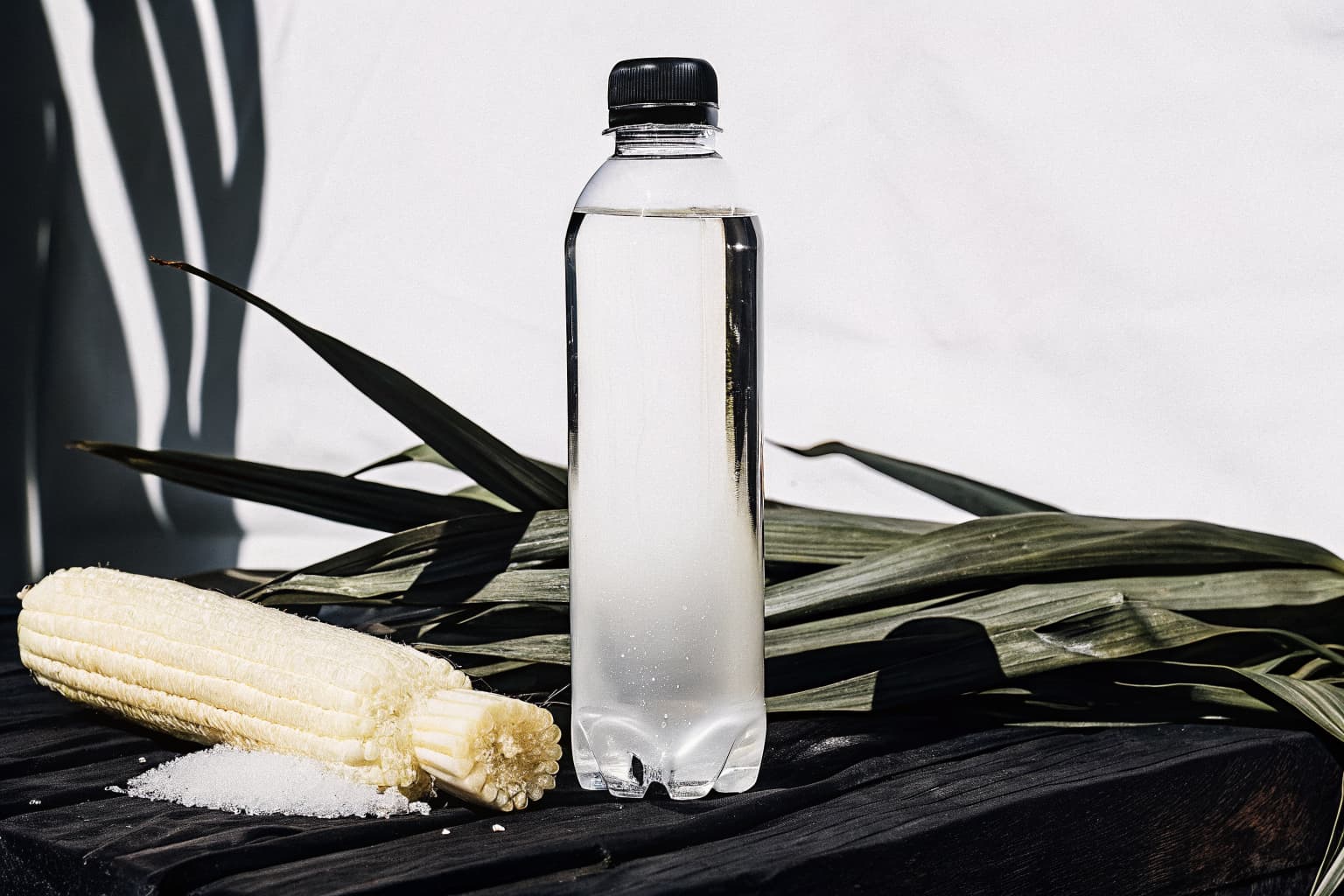
Every year, more than 500 billion plastic bottles are produced globally. The vast majority end up in landfills, incinerators, or scattered across landscapes and oceans — where they slowly fragment into microplastics that contaminate everything from drinking water to the food chain. The question isn't whether we need an alternative. It's which alternative is actually up to the task.
Two materials are leading the charge: PLA (Polylactic Acid), the first commercial-scale bioplastic that redefined what a disposable bottle could be, and the newer, rapidly emerging PHA (Polyhydroxyalkanoates) — a family of biopolymers produced by bacteria that may represent the most complete answer yet to the plastic pollution crisis. Understanding how each compares to conventional plastic, and to each other, is essential for any business or consumer serious about sustainability.
The Plastic Bottle Problem — and the Microplastic Crisis It Creates
Conventional plastic bottles are made primarily from PET (polyethylene terephthalate), a petroleum-derived polymer engineered to be lightweight, durable, and resistant to degradation. Those same properties that make PET useful in production make it catastrophic in the environment. A single PET bottle can persist for up to 450 years before fully breaking down.
The breakdown process itself is the problem. Rather than decomposing into organic matter, plastic bottles fragment under UV radiation and mechanical stress into progressively smaller pieces — eventually reaching microplastic scale (particles smaller than 5mm) and nanoplastic scale (invisible to the naked eye). These particles infiltrate water systems, soil, and marine ecosystems at concentrations that now make complete removal virtually impossible.
450 years
The estimated time for a PET plastic bottle to fully degrade — persisting in ecosystems for generations.
8M+ tons/year
Plastic entering oceans annually, with bottles among the most commonly found items in beach and ocean surveys.
In human blood
Microplastics have been detected in human blood, breast milk, and placentas — underscoring the direct health implications.
PLA Bottles — The First Wave of Bioplastics
Polylactic Acid (PLA) was the bioplastics industry's first serious answer to petroleum-based packaging at commercial scale. Derived primarily from fermented plant sugars — most commonly corn starch, sugarcane, or cassava — PLA is a thermoplastic polyester that can be molded into bottles, containers, and film using much of the same equipment used for conventional plastic. This made the initial transition to PLA operationally feasible for manufacturers.
Chemically, PLA behaves similarly to PET at the consumer level — it's clear, rigid, and suitable for beverages, fresh food, and cold-chain applications. The critical difference lies in its composition: PLA is derived from renewable, carbon-neutral feedstocks rather than fossil fuels, which significantly reduces the carbon footprint of production compared to PET.
PLA is industrially compostable, breaking down into carbon dioxide, water, and biomass under the controlled conditions of commercial composting facilities — typically within 3 to 6 months at temperatures above 55°C. This represents a genuine improvement over PET, though it also exposes PLA's principal limitation: it requires specific infrastructure to realize its end-of-life potential, and without access to industrial composting, it can persist in the environment nearly as long as conventional plastic.
PLA at a Glance
- Derived from renewable plant sugars (corn, sugarcane, cassava)
- Compostable in industrial composting conditions (55°C+, 3–6 months)
- Lower carbon footprint than petroleum-based PET in production
- Visually and functionally similar to conventional plastic
- Does NOT biodegrade in home compost, soil, or ocean environments without specific conditions
- Certified under industrial composting standards (e.g., EN 13432, ASTM D6400)
PHA Bottles — The Emerging Next Generation
Polyhydroxyalkanoates (PHA) represent the most promising advancement in biodegradable plastics since PLA was first commercialized. Unlike PLA, which is synthesized through chemical polymerization of plant-derived sugars, PHA is naturally produced inside microorganisms — typically bacteria — as an intracellular energy storage reserve under nutrient-limited conditions. The polymer is then harvested, processed, and formed into packaging, bottles, and other products.
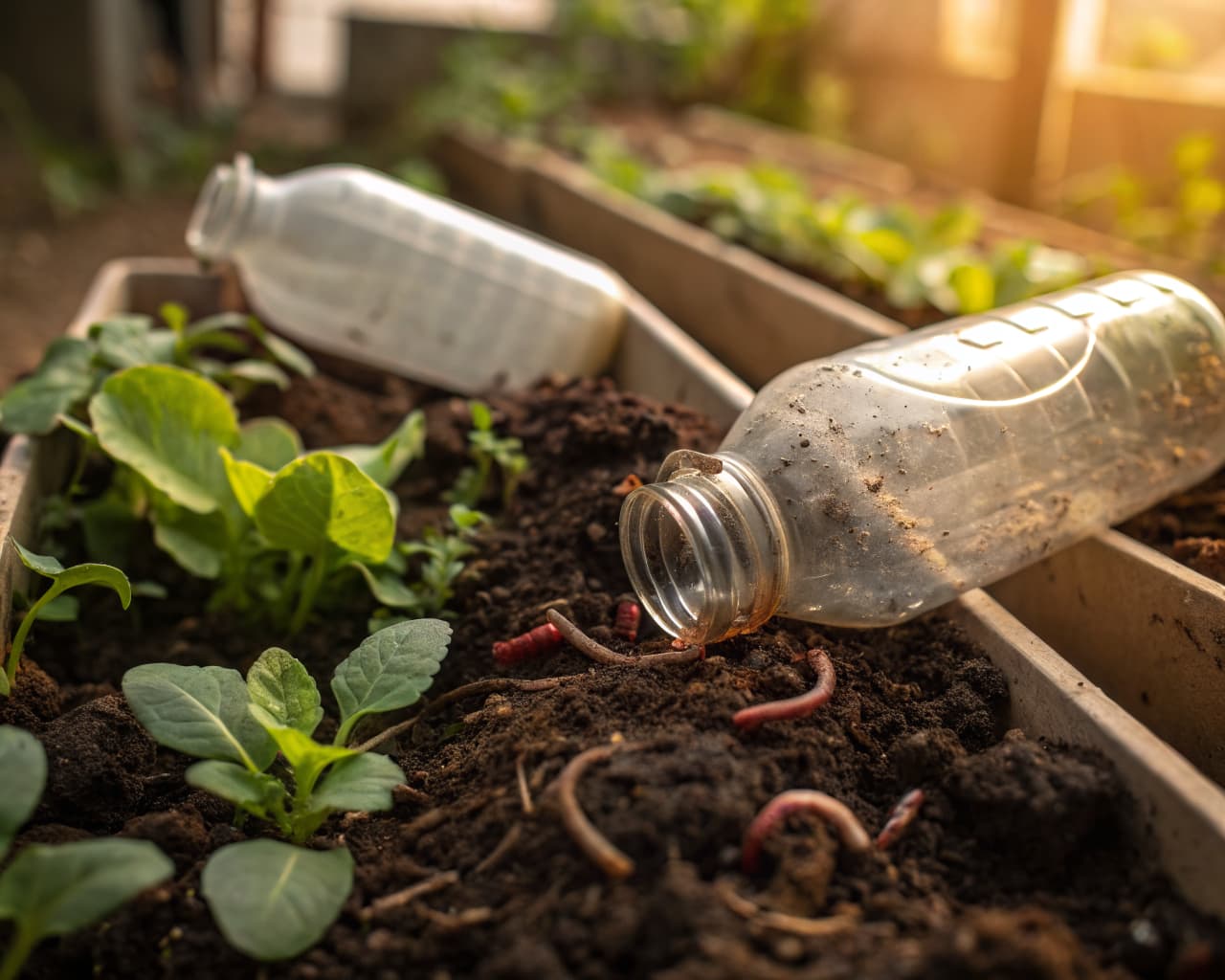
What separates PHA from every other bioplastic is where and how fast it breaks down. PHA degrades in soil, freshwater, seawater, and even the anaerobic conditions of landfills — without requiring the controlled heat of an industrial composter. Certified marine-biodegradable PHA products can degrade fully within months in ocean environments, making them the only scalable plastic alternative that addresses the reality of litter — because even the most well-designed disposal systems have failure points.
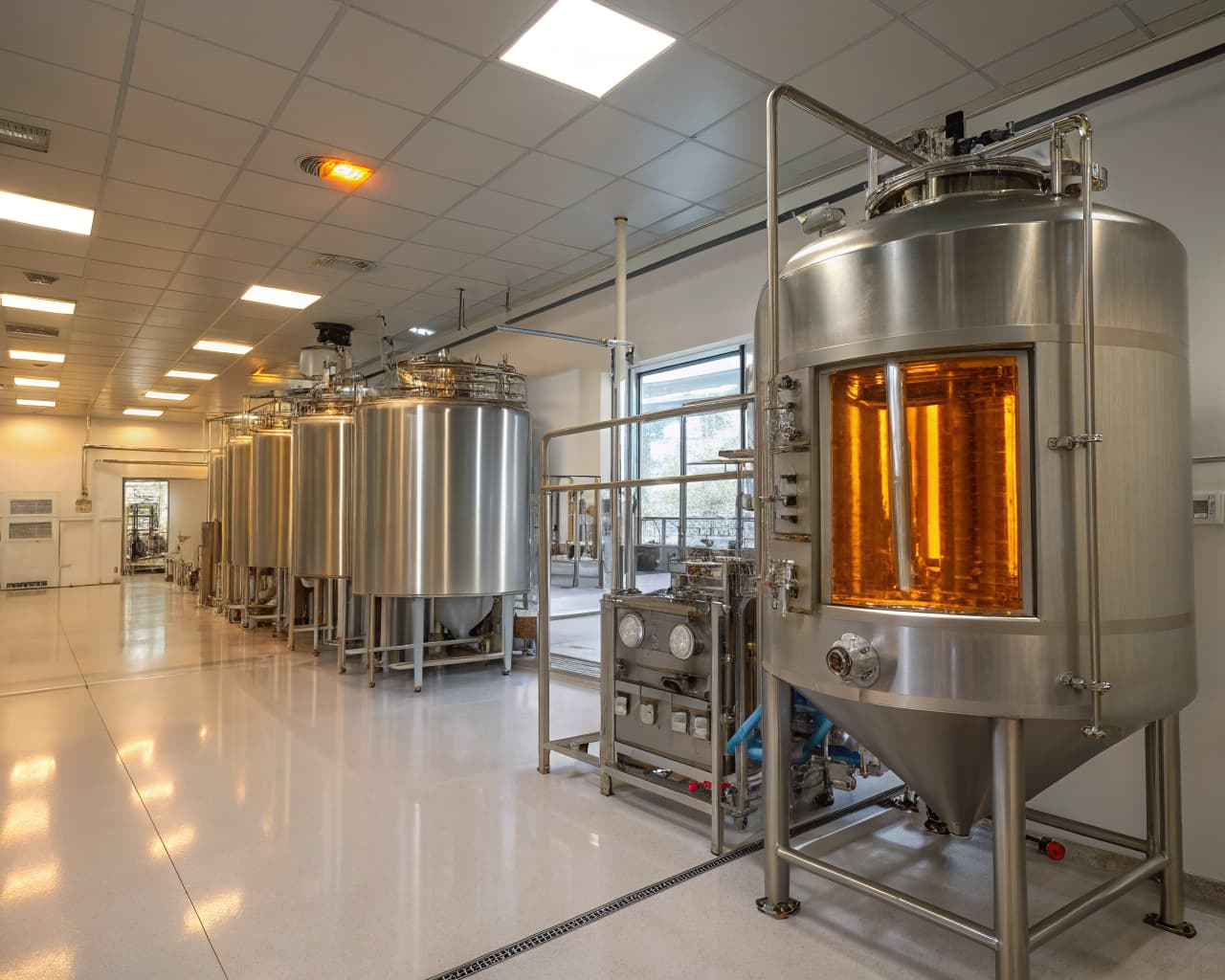
PHA production is also notable for its feedstock flexibility. Bacteria can be fed organic waste materials — including agricultural byproducts, food processing waste, and even certain waste gases — turning the manufacturing process into a form of circular economy in itself. Companies including Danimer Scientific, Newlight Technologies, and Full Cycle Bioplastics are currently scaling PHA production capacity, and the material is moving rapidly from specialty applications toward mainstream packaging.
The primary barrier to widespread PHA adoption has historically been cost — PHA production is roughly 2 to 4 times more expensive per kilogram than PET or PLA. But as fermentation processes improve and production scales, costs are declining steadily. Several analysts project PHA will reach cost parity with conventional bioplastics within the next decade.
PHA at a Glance
- Produced naturally by bacteria fed on organic feedstocks and waste streams
- Biodegrades in soil, freshwater, seawater, and landfill — no industrial composter required
- Certified marine-biodegradable (TÜV Austria OK Biodegradable Marine)
- Full mechanical performance comparable to PET in most applications
- Currently higher cost than PLA or PET — declining as production scales
- The only commercial bioplastic that addresses ocean pollution at point of escape
PLA vs. PHA vs. Plastic: The Key Differences
The choice between PLA, PHA, and conventional plastic involves trade-offs across biodegradability, performance, infrastructure dependency, and cost. Here's how they compare across the factors that matter most:
| Factor | Plastic (PET) | PLA | PHA |
|---|---|---|---|
| Raw material source | Fossil fuels (petroleum) | Renewable plant sugars | Bacteria / organic waste |
| Biodegradable in soil | ✗ No | ✗ Rarely | ✓ Yes |
| Biodegradable in ocean | ✗ No | ✗ No | ✓ Yes (certified) |
| Industrial composting | ✗ No | ✓ Yes | ✓ Yes |
| Microplastic risk | High | Low–Medium | Very Low |
| Carbon footprint | High | Lower than PET | Low (can be carbon-negative) |
| Current cost | Low | Moderate | Higher (declining) |
End-of-Life: Where the Real Difference Lies
The most important — and most misunderstood — aspect of biodegradable bottles is what happens when they leave the consumer's hands. Conventional plastic bottles degrade into microplastics regardless of disposal method. PLA improves significantly on that picture, but only under the right conditions. PHA is the first material that genuinely addresses the problem at the point of failure — real-world environmental escape.
In an ideal world, all waste streams would route through certified composting facilities. But in practice, a meaningful percentage of packaging ends up in natural environments — rivers, roadsides, coastlines, and oceans. PLA, despite being a bioplastic, requires temperatures above 55°C to degrade. In a cold ocean or landfill, it behaves almost identically to PET. PHA, by contrast, carries certifications confirming marine biodegradation within weeks to months.
Pure Form Solution's Approach to Compostable Bottling
Pure Form Solution's compostable bottling line takes a material-first approach, building bottles from 100% sugarcane-derived polymer — entirely free of petroleum inputs. The result is a bottle that can replace PET across the full range of commercial beverage and food applications: acidic juices, milk, water, and carbonated drinks.
A defining feature of Pure Form's formulation is the incorporation of calcium-enriched resin — a trace element that does not merely make the bottle inert in aquatic environments, but can actively benefit marine ecosystems when the material reaches ocean water. This design philosophy goes beyond "doing less harm" and moves toward materials that contribute positively to the environments they encounter.
Pure Form's compostable bottles are also part of a closed-loop recovery program. Used bottles can be returned and processed into secondary applications including animal feed and 3D printing filament — demonstrating a circular material lifecycle that no conventional plastic program comes close to matching.
As PHA technology matures and production costs continue to fall, Pure Form Solution is positioned to integrate these next-generation materials into their bottling lines — extending their zero-microplastic, zero-petroleum commitment into the most demanding environmental scenarios.
What This Means for Businesses and Consumers
For businesses evaluating their packaging strategy, the choice between PLA and PHA maps roughly onto two different positions on the sustainability spectrum. PLA is available today at cost-competitive pricing, offers genuine improvement over PET, and aligns with industrial composting programs. For companies with established waste diversion infrastructure — hospitality groups, event venues, corporate campuses — PLA represents an immediately actionable upgrade.
PHA is the choice for organizations willing to invest slightly more now for material performance that leaves no ambiguity about environmental outcomes — regardless of how their packaging is ultimately disposed. For brands with high environmental commitments, premium market positioning, or operations in regions with limited composting infrastructure, PHA's guaranteed real-world biodegradation is an unambiguous advantage.
Choose PLA when...
- Industrial composting infrastructure is accessible
- Budget is a primary constraint
- Primary goal is eliminating petroleum from packaging
- Operations include controlled disposal environments
Choose PHA when...
- Marine or environmental biodegradation is required
- Premium positioning supports higher material costs
- Products may enter uncontrolled waste streams
- Maximum microplastic risk reduction is the goal
Challenges Still to Solve
Both PLA and PHA face real-world adoption barriers that innovation and infrastructure investment are steadily addressing:
Challenge
Recycling stream contamination
Path Forward
PLA and PHA must be kept separate from PET in recycling streams — consumer education and clear labeling programs are critical to preventing contamination.
Challenge
Limited industrial composting access
Path Forward
PLA's full benefits depend on composting infrastructure that remains unavailable in many regions — expansion of municipal composting is an urgent systemic priority.
Challenge
PHA production costs
Path Forward
Continued investment in fermentation efficiency, feedstock optimization, and downstream processing is driving cost curves downward toward mainstream viability.
Challenge
Greenwashing confusion
Path Forward
Terms like "biodegradable," "compostable," and "biobased" are routinely misused. Third-party certifications (TÜV Austria, Din Certco) are the reliable standard for distinguishing genuine performance.
The Future of the Bottle
The plastic bottle crisis has two dimensions: the mountain of plastic already in the environment, and the ongoing production of new material that will add to it for decades if the industry doesn't change course. PLA and PHA address the second dimension — and PHA, uniquely, begins to address the first by offering genuine environmental safety even for material that escapes proper disposal.
Neither material is a perfect drop-in replacement today — but both represent a fundamentally different relationship between human packaging and the natural world. PLA removes petroleum. PHA removes persistence. Together, they define what the next generation of bottling looks like: materials made from life, returning to life, without leaving a toxic legacy behind.
The transition away from PET plastic bottles is no longer a question of possibility — it's a question of pace. Manufacturers, brands, policymakers, and consumers all have a role in accelerating that pace. Companies like Pure Form Solution are proving at commercial scale that high-performance, petroleum-free bottling is not only achievable — it's available now.
The bottle of the future looks a lot like the bottles we already know how to make. It just doesn't have to outlive everyone alive today.
Explore Pure Form Solution Products